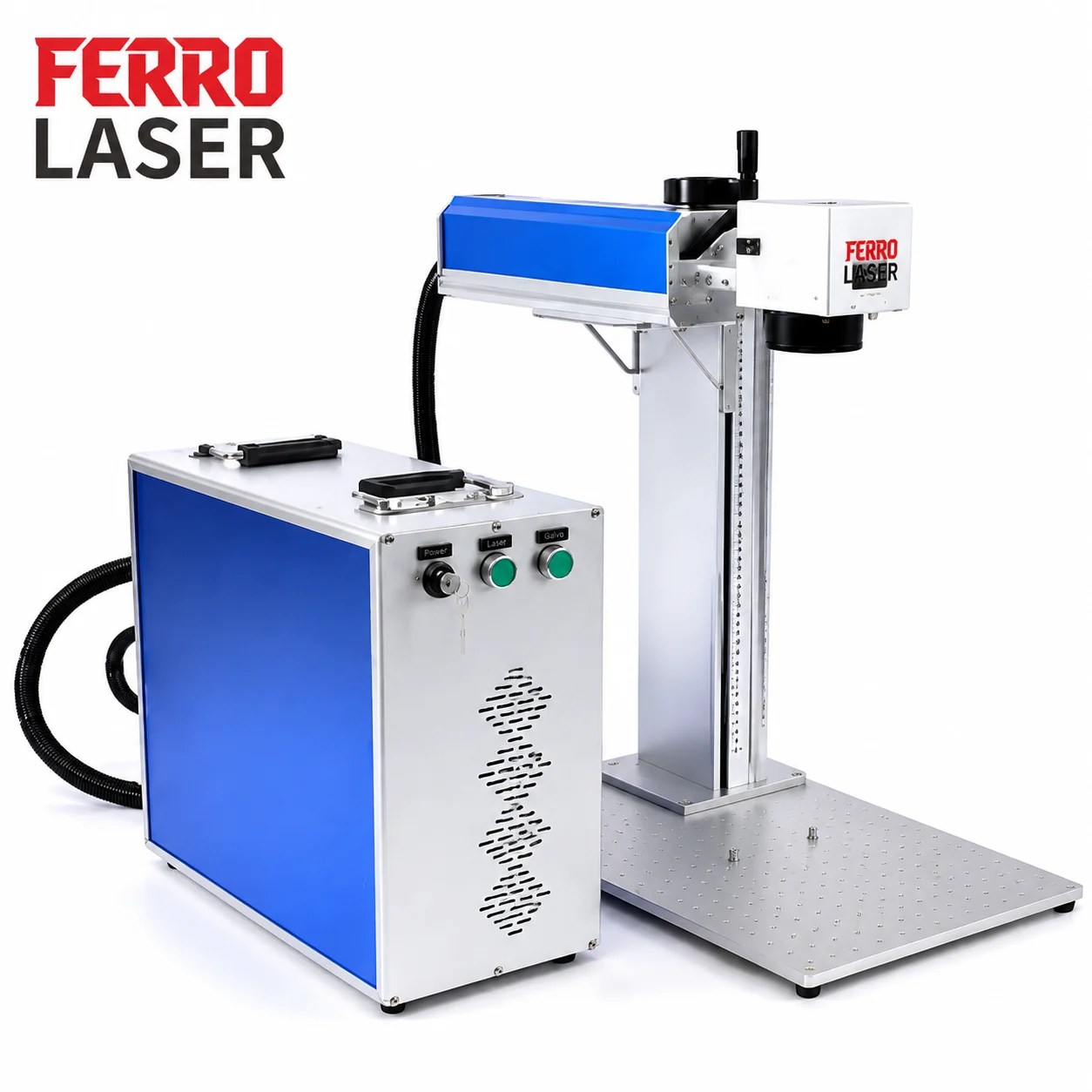
Wider Marking Capability
Adjustable pulse width and frequency make the machine suitable for stainless steel color marking, black marking on anodized aluminum, precision engraving, and selected plastic marking.

Type a model, material, or topic — e.g. FL-FC3015E, stainless, welding.
No matches — try a different keyword.
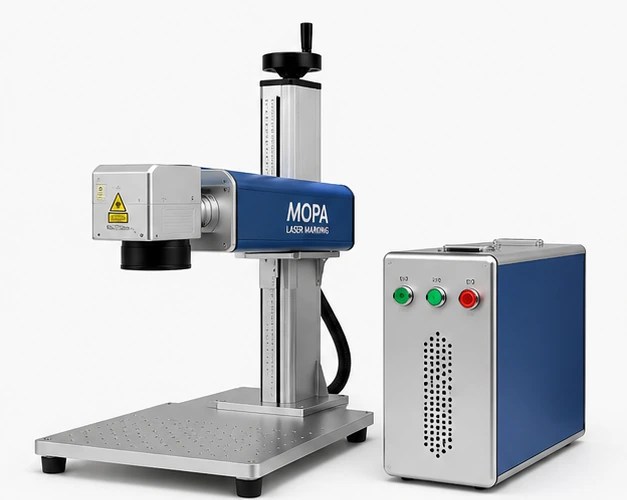
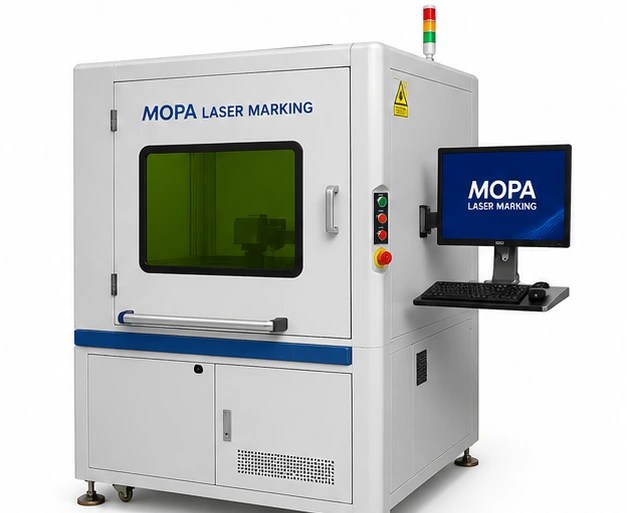
The FL-MM MOPA Laser Marking Machine provides adjustable pulse width and frequency for high-precision color marking, black marking, fine engraving and selected heat-sensitive materials. It is available in 20–200 W configurations with marking areas from 75 × 75 to 300 × 300 mm.
 1 / 6
1 / 6 Rough guide only — the exact price depends on configuration, power, automation, optics and shipping destination. Talk to our sales team for an accurate FOB quote tailored to your job.
An applications engineer will reply with a real configuration and price range within one business day.
Tell us your material, thickness & throughput — an applications engineer replies with a real configuration and price range within one business day.
The MOPA laser marking machine is designed for manufacturers who need high-precision, high-contrast, and flexible marking on metals and selected plastics. It is especially suitable for stainless steel color marking, black marking on anodized aluminum, fine engraving, and heat-sensitive material processing. Compared with standard fiber laser markers, MOPA technology offers adjustable pulse width and frequency, allowing better control over marking depth, color, and thermal impact. It helps improve marking quality, application range, and production consistency in industrial environments.
Adjustable pulse width and frequency make the machine suitable for stainless steel color marking, black marking on anodized aluminum, precision engraving, and selected plastic marking.

Max marking speed up to 7000 mm/s, working accuracy up to ±0.01 mm, with optional marking areas such as 75×75 mm, 100×100 mm, 200×200 mm, and 300×300 mm.

Available in 20 W / 30 W / 50 W / 100 W / 200 W, optional laser sources such as Raycus, MAX, with EZCAD control software and broad file format compatibility.


Adjustable pulse width and frequency provide precise control over laser energy and heat input. This enables cleaner edges, finer details, controlled engraving depth, and reduced thermal damage when processing sensitive materials or complex marking patterns.


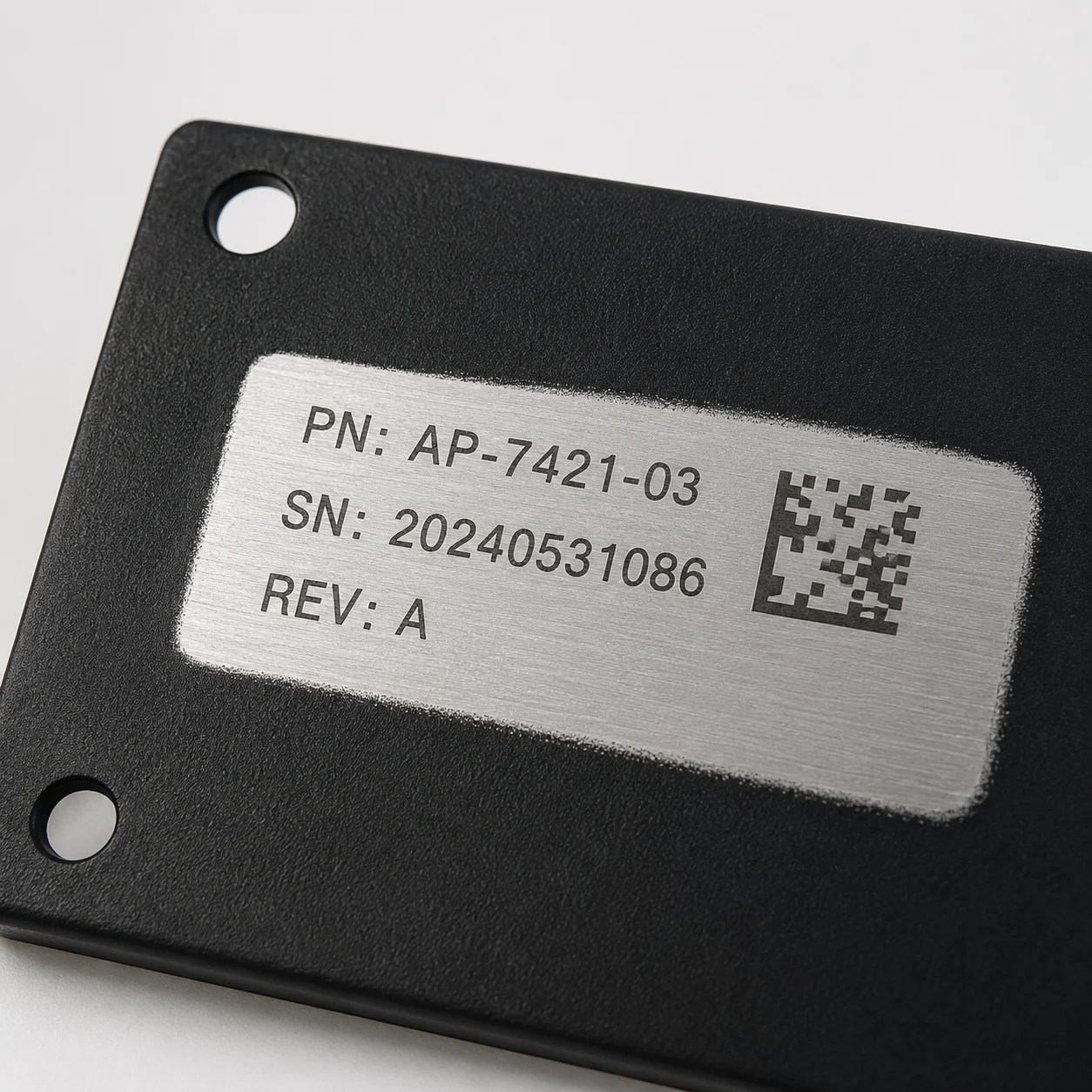
MOPA technology produces vivid color marking on stainless steel and titanium while supporting clear, high-contrast identification on different metal surfaces. It is suitable for decorative logos, product labels, serial numbers, and premium customized components.
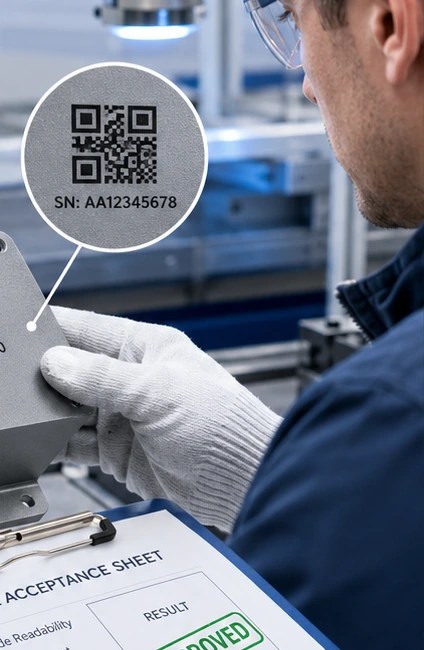
High marking speed and precise beam control help manufacturers produce sharp QR codes, serial numbers, fine graphics, and small text efficiently. The system maintains clear edges and consistent results during continuous industrial production.
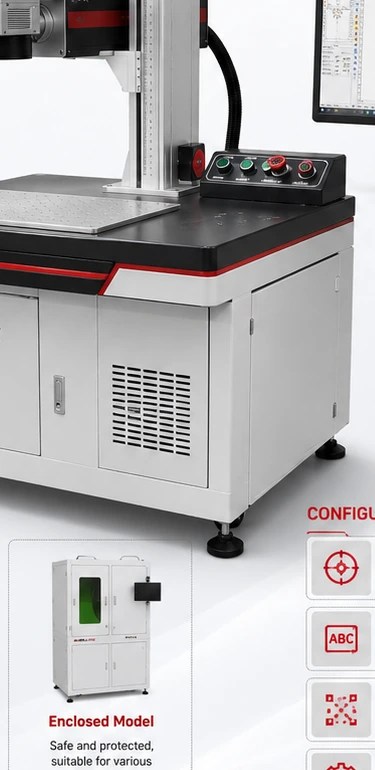

Multiple power levels, marking areas, laser source brands, and machine structures allow the system to match different production requirements. Users can select configurations for small precision parts, larger workpieces, portable operation, or enclosed processing.
| Material / Workpiece | Thickness / Size | Recommended Configuration | Process Note |
|---|---|---|---|
| Stainless Steel for Color Marking | Surface marking; material thickness is not restrictive. Recommended marking field: 100 × 100 mm or 200 × 200 mm. | 30 W–100 W MOPA laser, adjustable pulse width and frequency; smaller field lens for finer color details. | Clean the surface before marking. Optimize pulse width, frequency, speed, and hatch spacing to obtain stable blue, gold, purple, or multicolor effects. |
| Anodized Aluminum for Black Marking | Aluminum labels, housings, panels, and components within a 75 × 75 to 300 × 300 mm marking field. | 20 W–50 W MOPA laser, normally with a 100 × 100 mm field for high-contrast identification. | Adjust energy input and scanning parameters to create a dark, high-contrast mark while minimizing damage to the anodized surface. |
| Laser-Markable Plastics | Electronic housings, switches, connectors, caps, and small molded components. Thickness is generally not a limiting factor. | 20 W–30 W MOPA laser with a 75 × 75 or 100 × 100 mm marking area for fine details. | Plastic composition and additives affect the result. Sample testing is required to avoid melting, excessive foaming, or unwanted discoloration. |
| Coated or Painted Metals | Metal nameplates, coated panels, painted enclosures, and industrial identification parts. | 30 W–50 W MOPA laser with a 100 × 100 or 200 × 200 mm marking field. | Parameters can be adjusted for coating removal or contrast marking. Test the coating first to prevent unnecessary damage to the base material. |
| Industry | Typical Workpiece | Customer Pain Point | How This Machine Helps |
|---|---|---|---|
| Electronics Manufacturing | Metal housings, connectors, switches, control panels, component labels, and serial-number plates | Small components require readable QR codes and fine text, while excessive heat may damage sensitive surfaces or reduce marking quality. | Adjustable pulse control and up to ±0.01 mm working accuracy produce clear microtext, serial numbers, logos, and traceability codes with controlled thermal impact. |
| Jewelry & Premium Goods | Rings, bracelets, watch components, stainless steel accessories, metal gifts, and decorative products | Manufacturers need attractive logos, fine patterns, consistent colors, and minimal surface deformation for high-value products. | MOPA technology enables detailed engraving and vivid color marking on stainless steel and titanium, improving product appearance and customization capability. |
| Tools & Industrial Identification | Hand tools, drill bits, measuring tools, machine plates, hardware parts, and industrial components | Conventional labels may fade or detach, making long-term identification, batch management, and product traceability difficult. | The machine creates durable serial numbers, QR codes, scales, logos, and identification marks at speeds up to 7,000 mm/s, supporting efficient production. |


| Model | FL-MM: 20 W / 30 W / 50 W / 100 W / 200 W |
|---|---|
| Machine Dimensions | Configuration-dependent; available in portable, desktop, integrated and enclosed machine designs |
| Net Weight | Configuration-dependent; subject to selected machine body, laser power and optional accessories |
| Warranty | 1-Year |
| Laser Power | 20W / 30W / 50W / 100W / 200W |
|---|---|
| Pulse Width Range | 2–500 ns with optional JPT M7 20–100 W laser source; range varies by source brand and model |
| Frequency Range | 1–4,000 kHz with optional JPT M7 20–100 W laser source; range varies by source brand and model |
| Marking Area | 75 × 75 mm / 100 × 100 mm / 200 × 200 mm / 300 × 300 mm |
| Voltage / Frequency | AC 110 V or 220 V, 50/60 Hz, single phase; customized according to destination-country power standard |
|---|---|
| Rated Power Consumption | Configuration-dependent; subject to laser power, computer, enclosure, exhaust system and optional accessories |
| Operating Environment | Clean, dry and well-ventilated indoor environment; avoid dust, condensation, strong vibration and unstable power supply |
| Safety Requirement | Proper grounding, emergency stop, suitable laser protective eyewear or protective enclosure, safety interlock where applicable, and effective fume extraction |
| Model | Size | FOB Qingdao Price (USD) |
|---|---|---|
| FL-MM-75-20 W | 75×75 mm | $1,890 |
| FL-MM-75-30 W | 75×75 mm | $2,090 |
| FL-MM-75-50 W | 75×75 mm | $2,690 |
| FL-MM-75-100 W | 75×75 mm | $4,590 |
| FL-MM-75-200 W | 75×75 mm | $7,290 |
| FL-MM-100-20 W | 100×100 mm | $1,890 |
| FL-MM-100-30 W | 100×100 mm | $2,090 |
| FL-MM-100-50 W | 100×100 mm | $2,690 |
| FL-MM-100-100 W | 100×100 mm | $4,590 |
| FL-MM-100-200 W | 100×100 mm | $7,290 |
| FL-MM-200-20 W | 200×200 mm | $1,990 |
| FL-MM-200-30 W | 200×200 mm | $2,190 |
| FL-MM-200-50 W | 200×200 mm | $2,790 |
| FL-MM-200-100 W | 200×200 mm | $4,690 |
| FL-MM-200-200 W | 200×200 mm | $7,390 |
| FL-MM-300-20 W | 300×300 mm | $2,140 |
| FL-MM-300-30 W | 300×300 mm | $2,340 |
| FL-MM-300-50 W | 300×300 mm | $2,940 |
| FL-MM-300-100 W | 300×300 mm | $4,840 |
| FL-MM-300-200 W | 300×300 mm | $7,540 |
Tell us your material, size/thickness and daily output.



| Option | Standard / Optional | Recommended For | Effect on Price / Lead Time |
|---|---|---|---|
| Color Marking Package | Optional | Manufacturers requiring controlled color marking on stainless steel, titanium and suitable decorative metal products | Moderate price increase. Material testing and parameter development may extend preparation time before shipment. |
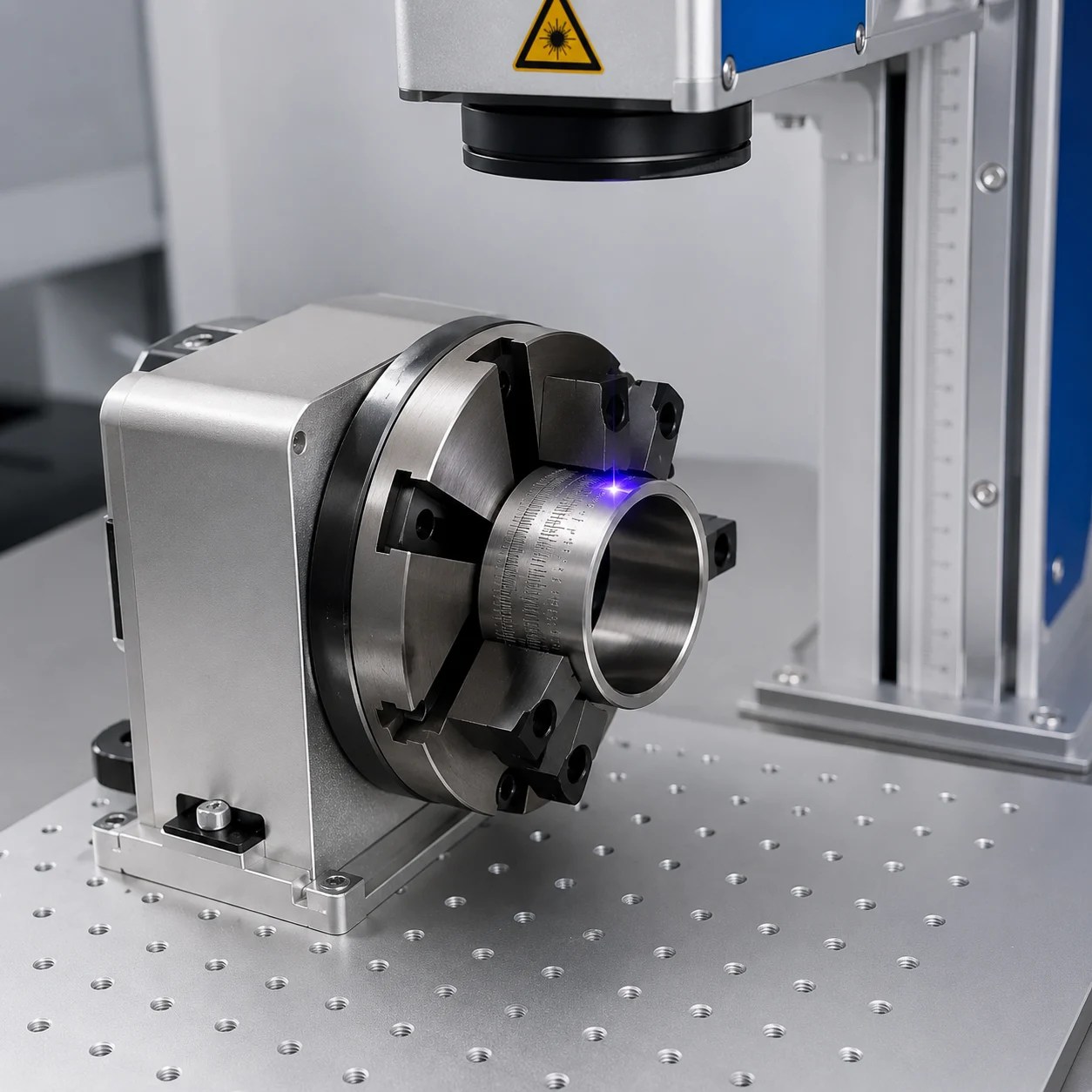
| Rotary Attachment | Optional | Rings, bearings, tubes, cups, tools and other cylindrical or curved workpieces | Small to moderate price increase. Standard rotary devices usually have limited effect on lead time; customized fixtures require additional preparation. |
| CCD Vision System | Optional | Small parts, irregularly positioned workpieces, batch loading and applications requiring automatic visual positioning | Significant price increase. Camera calibration, software integration and sample testing generally increase production and commissioning time. |
| Enclosed Workstation | Optional; standard when an enclosed machine model is selected | Workshops requiring improved laser protection, fume control, operator safety and a cleaner processing environment | Moderate to significant price increase. Custom enclosure size, interlocks and extraction interfaces may extend lead time. |
| Stage | Customer Provides | FerroLaser Delivers | Estimated Time |
|---|---|---|---|
| Requirement Review | Material type, workpiece dimensions, desired marking effect, daily output, destination country and local voltage | Application assessment, recommended laser power, marking-area selection, machine model and preliminary quotation | 1–2 business days |
| Configuration & Testing | Workpiece samples, artwork files, QR-code requirements, color or engraving expectations and acceptance criteria | Machine configuration, sample testing, parameter optimization, marking photos or videos and sample-test report | 5–10 business days after sample receipt |
| Packaging & Shipping | Confirmed trade terms, consignee details, destination port or address and required shipping documents | Quality inspection, export plywood case, operating documents, packing list, commercial invoice and logistics coordination | 3–7 business days after order completion |
| Installation & Support | Suitable installation space, stable power supply, grounded electrical connection, computer or network access and assigned operators | Remote installation guidance, software setup, operator training, parameter support, troubleshooting and after-sales assistance | 1–2 business days for remote setup after delivery |
1-year warranty for the machine, subject to the confirmed sales contract. Consumables, damage caused by improper operation and unauthorized modification are normally excluded.
Recommended commitment: initial response within 12 business hours. Remote diagnosis is provided first, followed by spare-parts guidance or on-site service when required and commercially agreed.
Long-term support for protective lenses, F-theta lenses, galvanometer components, control boards, power supplies, switches, rotary-fixture parts and other commonly used components, subject to stock availability and the confirmed machine configuration.

MOPA lasers offer wider pulse-width and frequency adjustment, providing better control over heat, contrast, color and engraving depth. They are better suited for color marking, black marking and heat-sensitive materials.
Yes. It can produce blue, gold, purple and other colors on suitable stainless steel. Results depend on material grade, surface condition and marking parameters, so sample testing is recommended.
Yes. MOPA technology can create clear, high-contrast black marks on suitable anodized aluminum. The final darkness depends on the anodizing quality, coating thickness and selected parameters.
Pulse width affects peak power, heat input and marking depth. Frequency influences pulse density, contrast and processing speed. Both should be adjusted together with power, speed and hatch spacing.
Laser-markable ABS, PC, PA, PMMA and plastics with laser additives may be suitable. Because pigments and fillers affect results, actual material samples should be tested before production.
Engineers test pulse width, frequency, power, speed, hatch spacing, focus and pass count on the actual material. Approved settings should be recorded with sample photos or test reports.
We use cookies to analyse traffic and improve your experience. See our Privacy Policy.